
Brewery, Distillery & Winery Insurance Cost in Ohio
Kenneth Schaub, Owner & Licensed Insurance Advisor
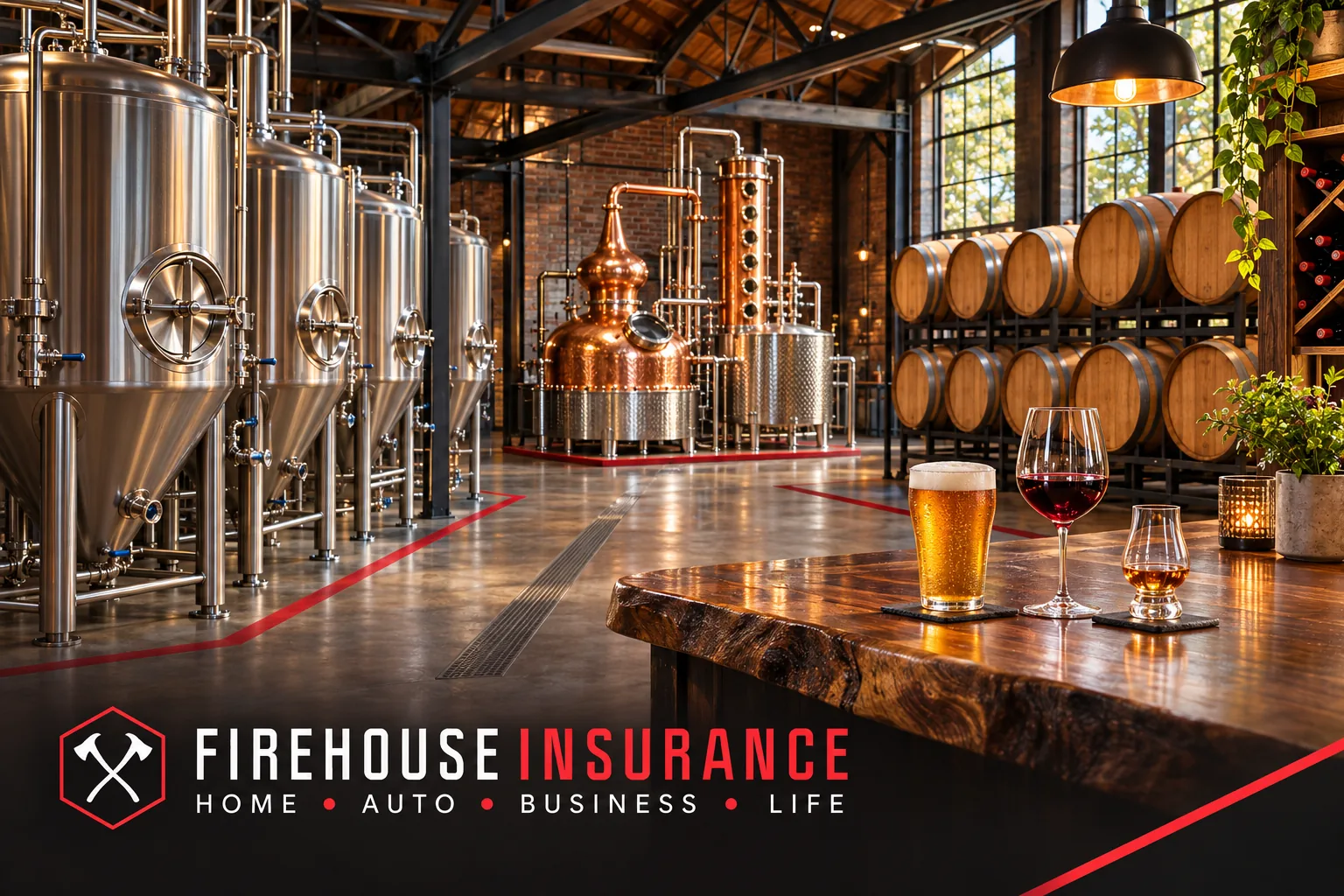
Ohio breweries, wineries, and distilleries carry a combined exposure that a typical bar simply doesn't have: they're not just serving alcohol, they're manufacturing it, which layers real product and manufacturing liability on top of the liquor liability every alcohol-serving business needs.
Manufacturing Changes the Risk Picture
A bar's core exposure is liquor liability, the legal risk tied to serving alcohol to patrons. A brewery, winery, or distillery that also sells on-premises faces that same exposure, plus a second, distinct one: product liability tied to what they actually produce. A contamination issue, a bad batch, an equipment failure during production, these are manufacturing risks a pure retailer of alcohol never has to think about.
| Exposure | Bar (serves only) | Brewery/winery/distillery (manufactures) |
|---|---|---|
| Liquor liability | Yes | Yes, if selling on-premises |
| Product liability | No | Yes |
| Manufacturing equipment breakdown | No | Yes |
Your Permit Class Signals Your Real Operation
Ohio's liquor permit structure maps closely to the size and type of manufacturing operation, and knowing which class you hold is a useful signal for the insurance conversation too:
- A-1C — craft breweries producing up to 31 million gallons a year ($1,000 fee, ORC 4303.022), including on-premises retail sales. Most Ohio taproom-style breweries fall here.
- A-1 — larger-volume brewing above that threshold ($3,906 fee, ORC 4303.02).
- A-2 — the general winery permit (ORC 4303.03).
- A-2F — farm wineries that grow their own fruit or agricultural product on owned land, a distinct, lower-fee classification.
- A-3 / A-3A (commonly referenced, confirm directly) — distillery permits, with some sources describing a brewery-distillery combination taproom pairing an A-1C with a distillery-specific permit.
Don't Assume Recall Coverage Is Automatic
For a business producing a consumable product, a recall is a real, specific financial exposure, contaminated batches, mislabeling, a packaging defect. Recall-specific coverage is sometimes sold as an add-on rather than bundled automatically into standard product liability, confirming it's actually part of your policy, rather than assumed, is worth doing directly.
Building the Right Package
A craft brewery, winery, or distillery with a taproom realistically needs liquor liability, product liability, commercial property (including the production equipment itself), and general liability, built around the actual permit class and operation you run, not a generic bar policy with a manufacturing afterthought bolted on.
If you're running a brewery, winery, or distillery in Ohio, get a quote built around both sides of your operation: the liquor service and the manufacturing. If your business is purely service without manufacturing, liquor liability insurance for bars covers that narrower picture.
Frequently asked questions
What's different about insuring a brewery or distillery compared to a bar?
A bar primarily serves alcohol it doesn't make, so its main exposure is liquor liability. A brewery, winery, or distillery manufactures the product, adding real product liability and manufacturing exposure (contamination, a batch defect, equipment breakdown in the production process) on top of liquor liability if they also sell for on-premises consumption.
What Ohio liquor permit does a small craft brewery typically hold?
The A-1C permit covers manufacturers producing up to 31 million gallons a year and carries a $1,000 fee under ORC 4303.022, it also allows on-premises retail sales, which is why most Ohio taproom-style craft breweries operate under this permit class rather than the larger-volume A-1.
Is a winery's permit different from a brewery's?
Yes. Wineries generally hold an A-2 permit (ORC 4303.03), with a distinct A-2F classification for farm wineries that grow their own fruit or other agricultural product on land they own and use for agriculture, a meaningfully lower fee structure than the brewery permits.
Does a brewery-distillery combination taproom need two separate permits?
Likely yes, one source describes pairing an A-1C (brewery) with a distillery-specific permit (commonly referenced as A-3/A-3A) for a combined taproom operation, though this combination should be confirmed directly with Ohio's Division of Liquor Control before relying on it for a specific business plan.
Does product liability insurance cover a product recall?
Not automatically in every policy, recall-specific coverage is sometimes a separate add-on rather than something bundled into standard product liability. For a manufacturer selling a consumable product, confirming whether recall expenses are actually included is worth doing directly rather than assuming.
Ready to see your real rate?
Get My Quote