
Janitorial & Commercial Cleaning Company Insurance Cost
Kenneth Schaub, Owner & Licensed Insurance Advisor
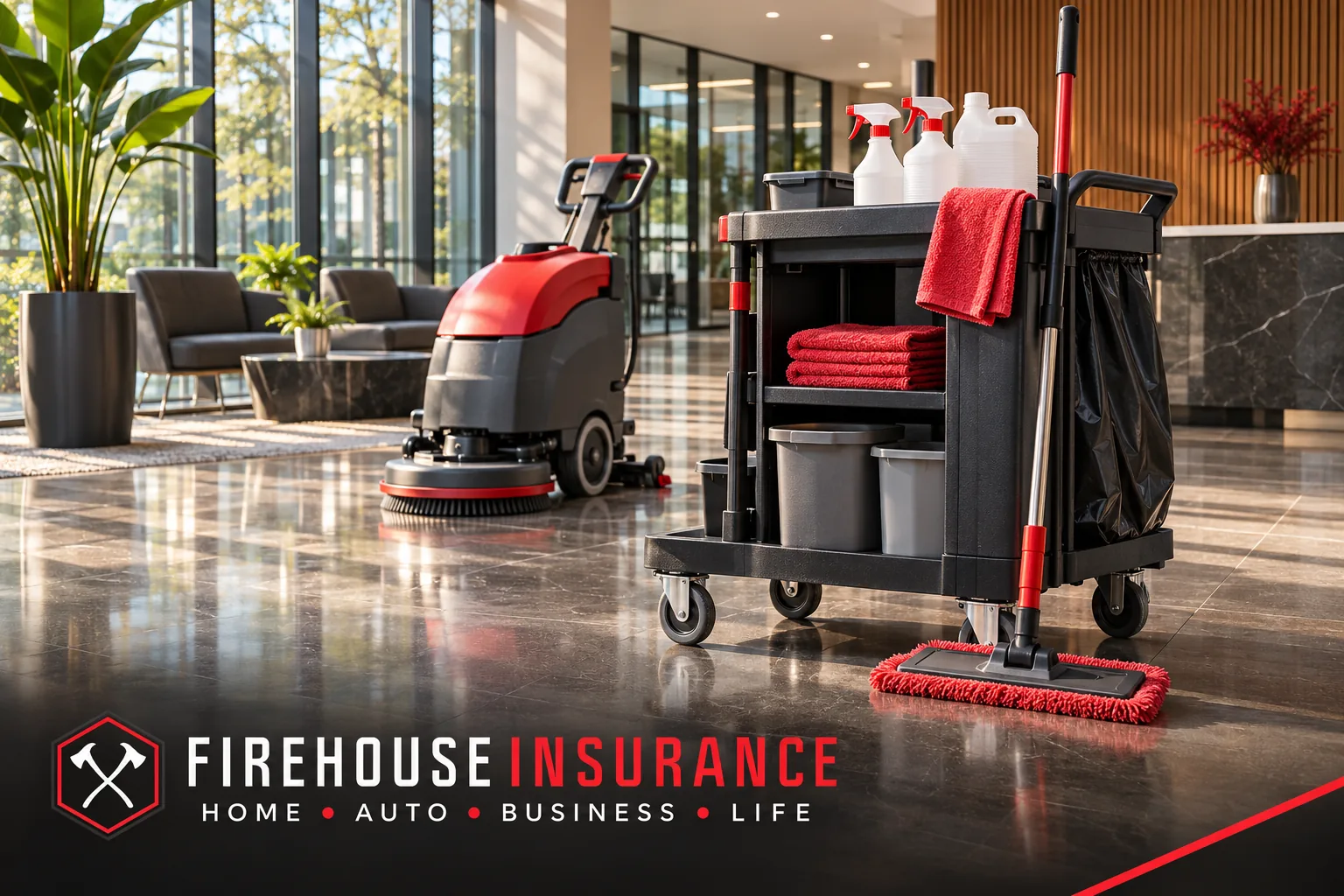
A small janitorial or commercial cleaning company typically pays $500 to $1,500 a year for general liability insurance. Separately, almost every serious commercial client will expect proof of a janitorial bond, a different, inexpensive product that most new cleaning business owners don't realize they need until a potential client asks for it by name.
A Bond Is Not Insurance, and That Distinction Matters
A janitorial bond is a type of fidelity bond (also called an employee dishonesty bond), a three-party arrangement between your company, your client, and the surety company backing the bond. It specifically protects your client if one of your employees steals from them or damages their property while cleaning their space.
General liability insurance, by contrast, covers accidental damage and injuries, a mop bucket left somewhere it caused a fall, a cleaner who accidentally breaks something. These are genuinely different triggers, and one doesn't substitute for the other.
| Risk | Covered by |
|---|---|
| Employee accidentally damages property while cleaning | General liability |
| Employee steals from the client's premises | Janitorial bond (fidelity bond) |
| Client slips on a wet floor your crew left | General liability |
Is It Actually Required?
Not by Ohio law, there's no general statute mandating it. It's entirely contract-driven: commercial property managers, facility owners, and especially government and healthcare clients routinely require proof of bonding before they'll sign a service agreement at all. In practice, not having one can simply disqualify you from bidding on the contracts that matter most.
The Cost Doesn't Match the Value
Bonding is genuinely inexpensive, commonly cited around $100 to $500 a year for most small cleaning operations, a small cost relative to the doors it opens when you can confidently say "bonded and insured" in a bid.
Rounding Out the Package
Workers' compensation for employees, general liability for the everyday accidental risks, and a janitorial bond for the theft exposure clients specifically ask about, together, these are the real foundation most commercial cleaning contracts expect to see.
Get a quote that covers both the insurance and bonding side your commercial clients are going to ask about.
Frequently asked questions
What is a janitorial bond, and is it insurance?
A janitorial bond is a type of fidelity (employee dishonesty) surety bond, not insurance in the traditional sense. It's a three-party arrangement between the cleaning company, the client, and the surety, and it specifically protects the client if a cleaning employee steals from them or damages their property while on-site.
Is a janitorial bond legally required in Ohio?
No, there's generally no state law requiring it. The real driver is contractual: most commercial property managers, facility owners, and especially government or healthcare clients will require proof of bonding before they'll sign a service agreement, even without a legal mandate.
How is a janitorial bond different from general liability insurance?
They cover different things entirely. General liability covers accidental damage and injuries, a cleaner who knocks over and breaks something by accident. The bond covers intentional employee theft specifically. Most cleaning companies carry both because clients expect, and the real risks require, coverage for each.
Do residential cleaning businesses need a janitorial bond too?
Less commonly. Bonding requirements show up far more often in commercial contracts than residential ones, though a residential cleaner working through a property management company that maintains vendor bonding standards may still need it.
How much does a janitorial bond typically cost?
It's generally inexpensive, commonly cited in the $100 to $500 a year range for most small cleaning businesses, modest compared to the competitive advantage of being able to say you're bonded when bidding on commercial contracts.
Ready to see your real rate?
Get My Quote